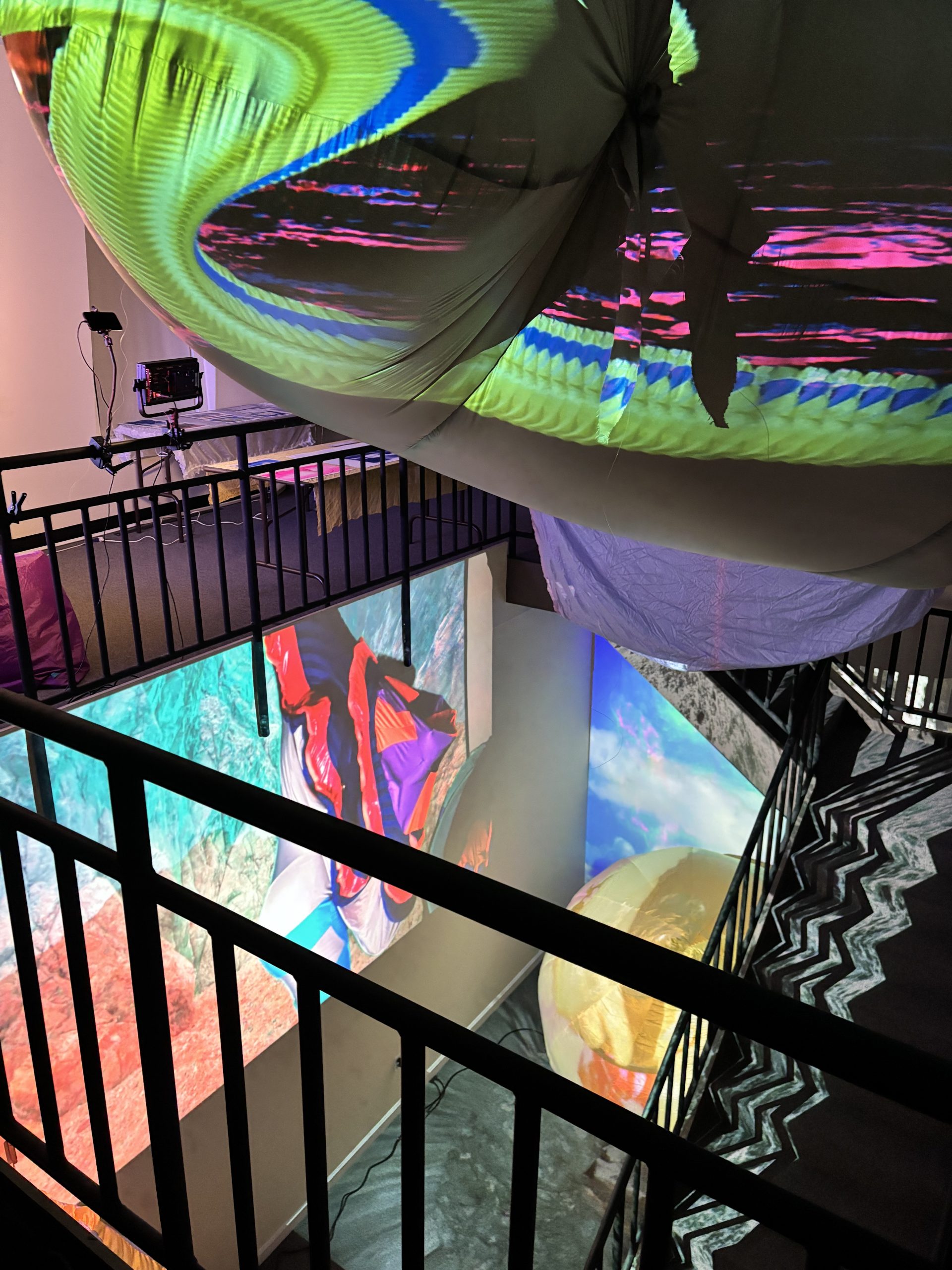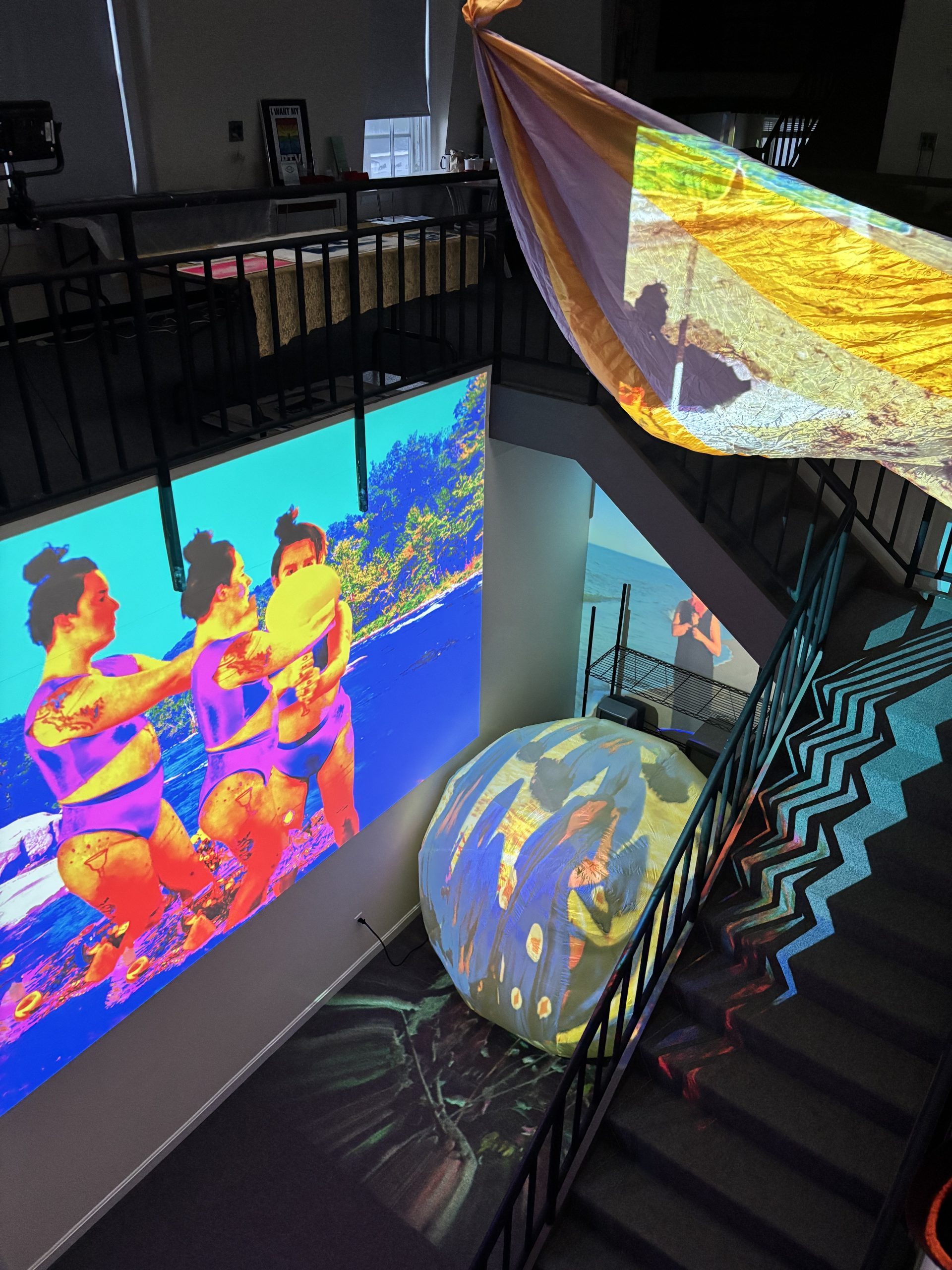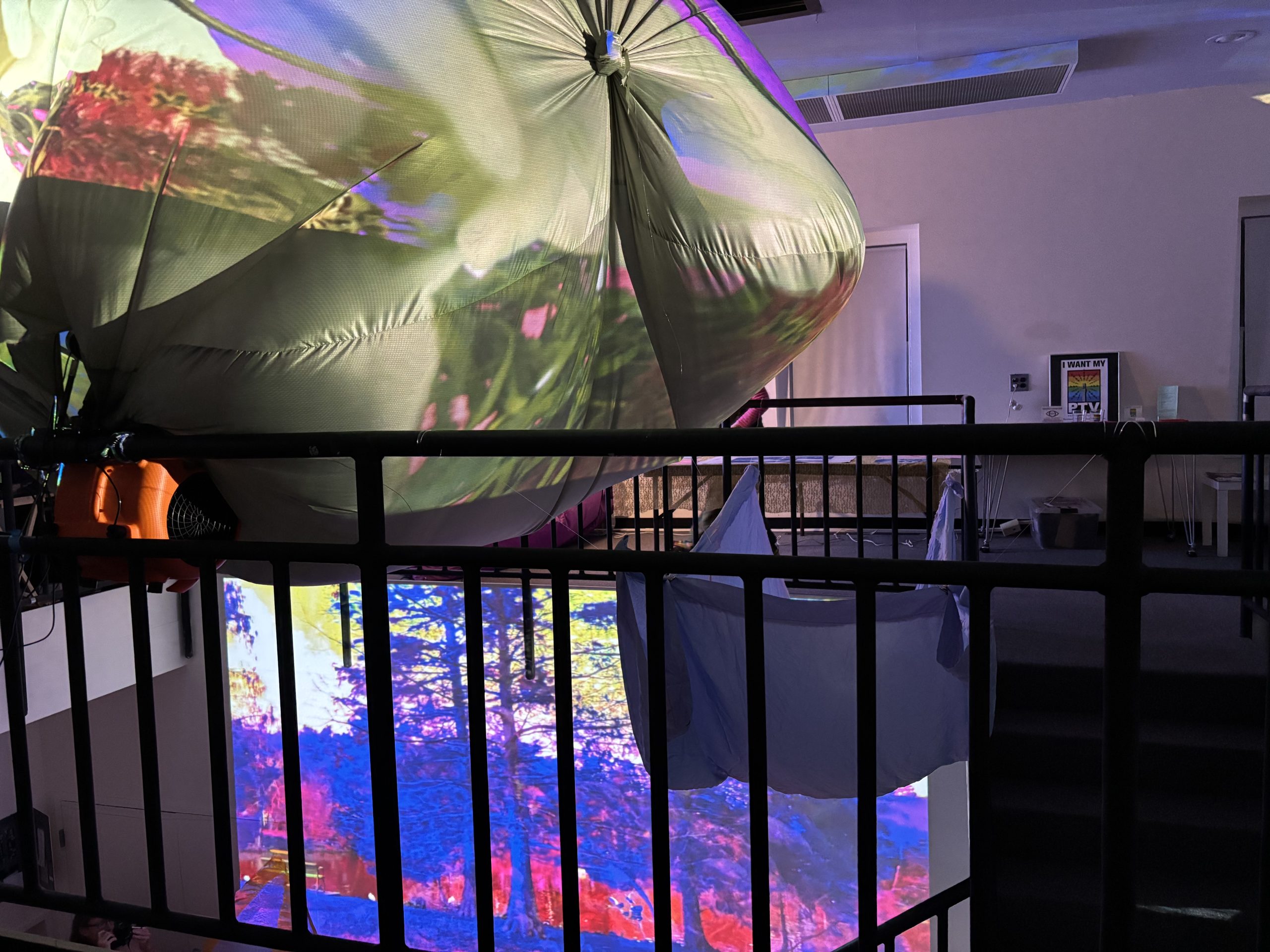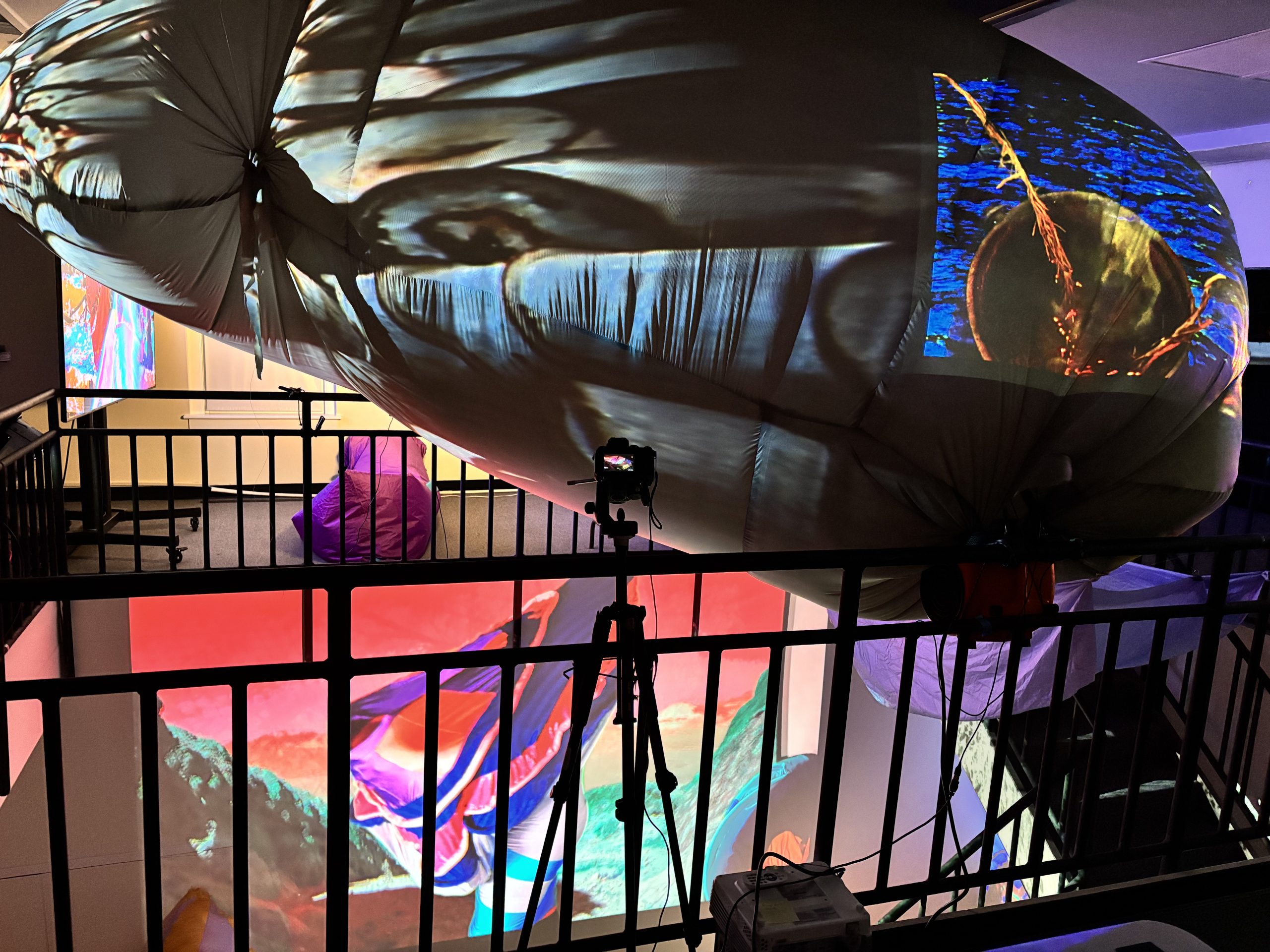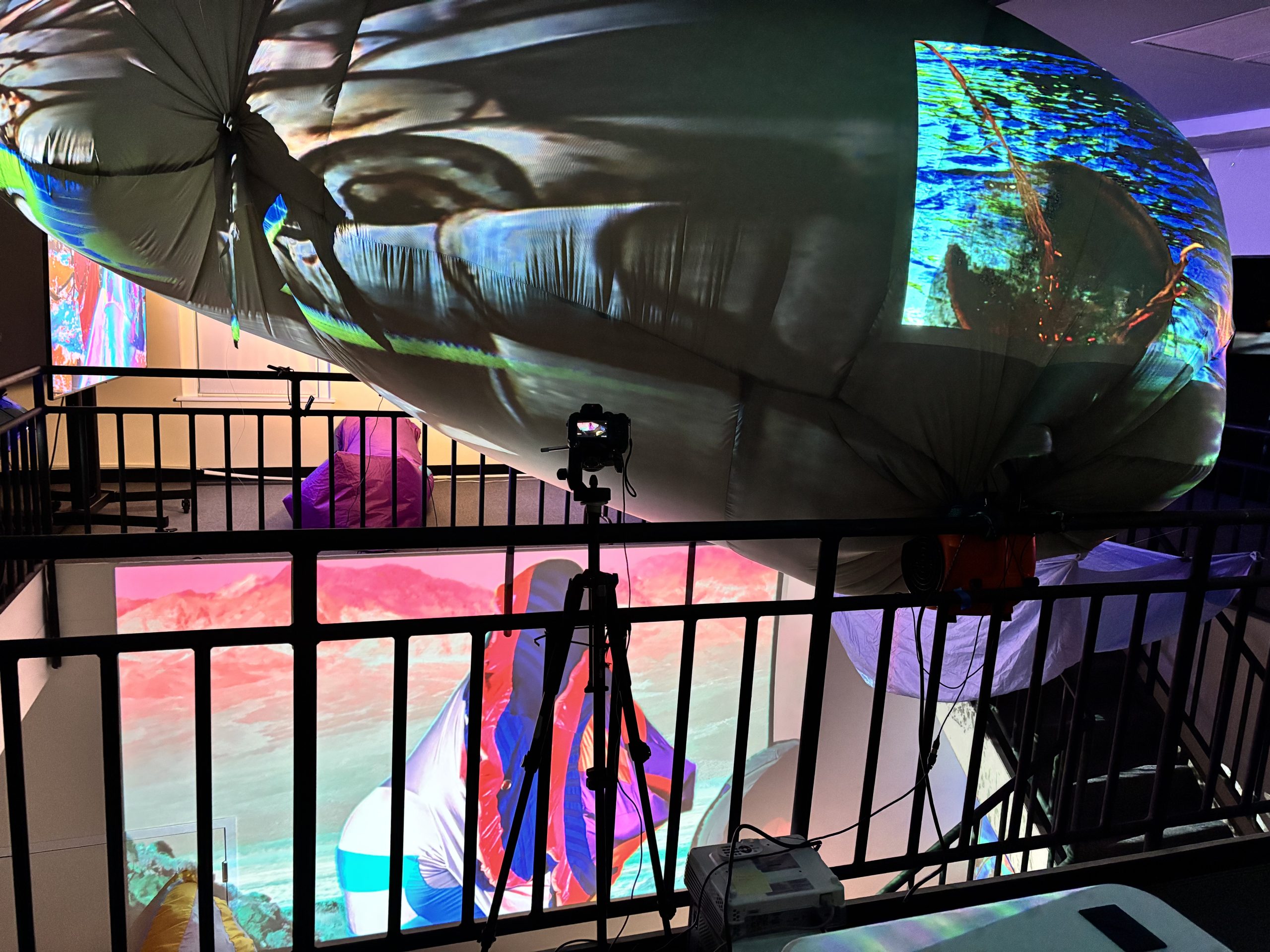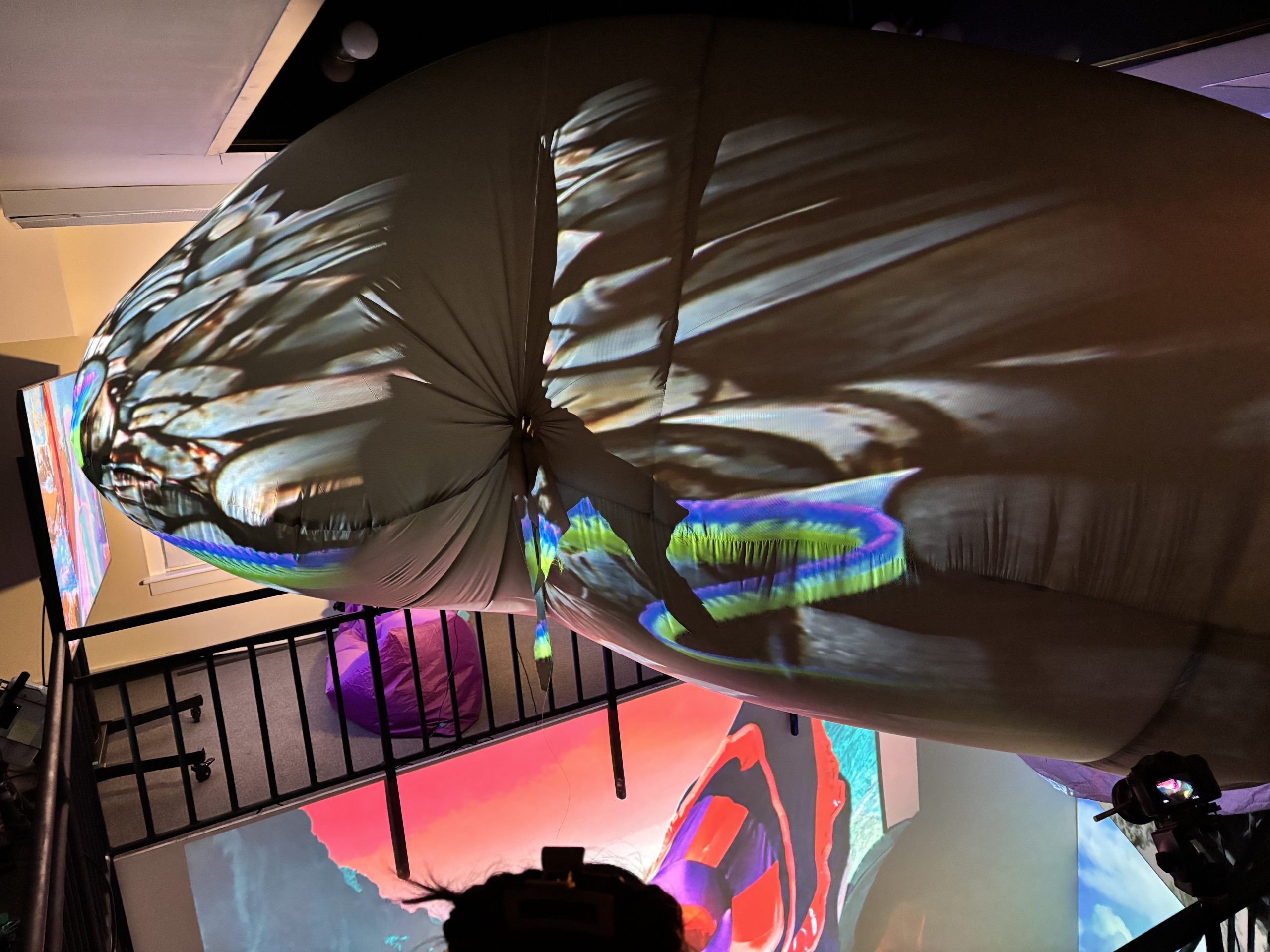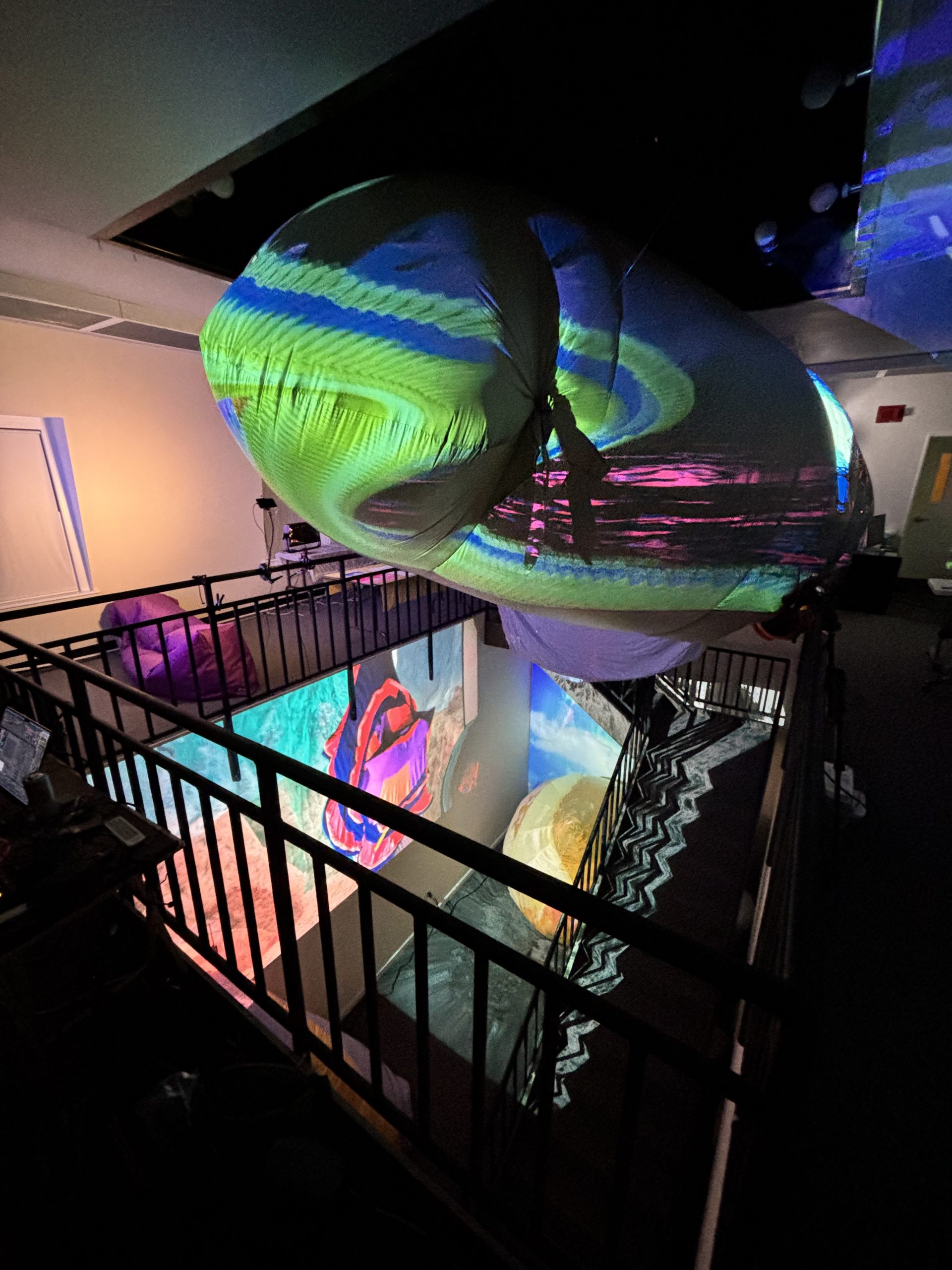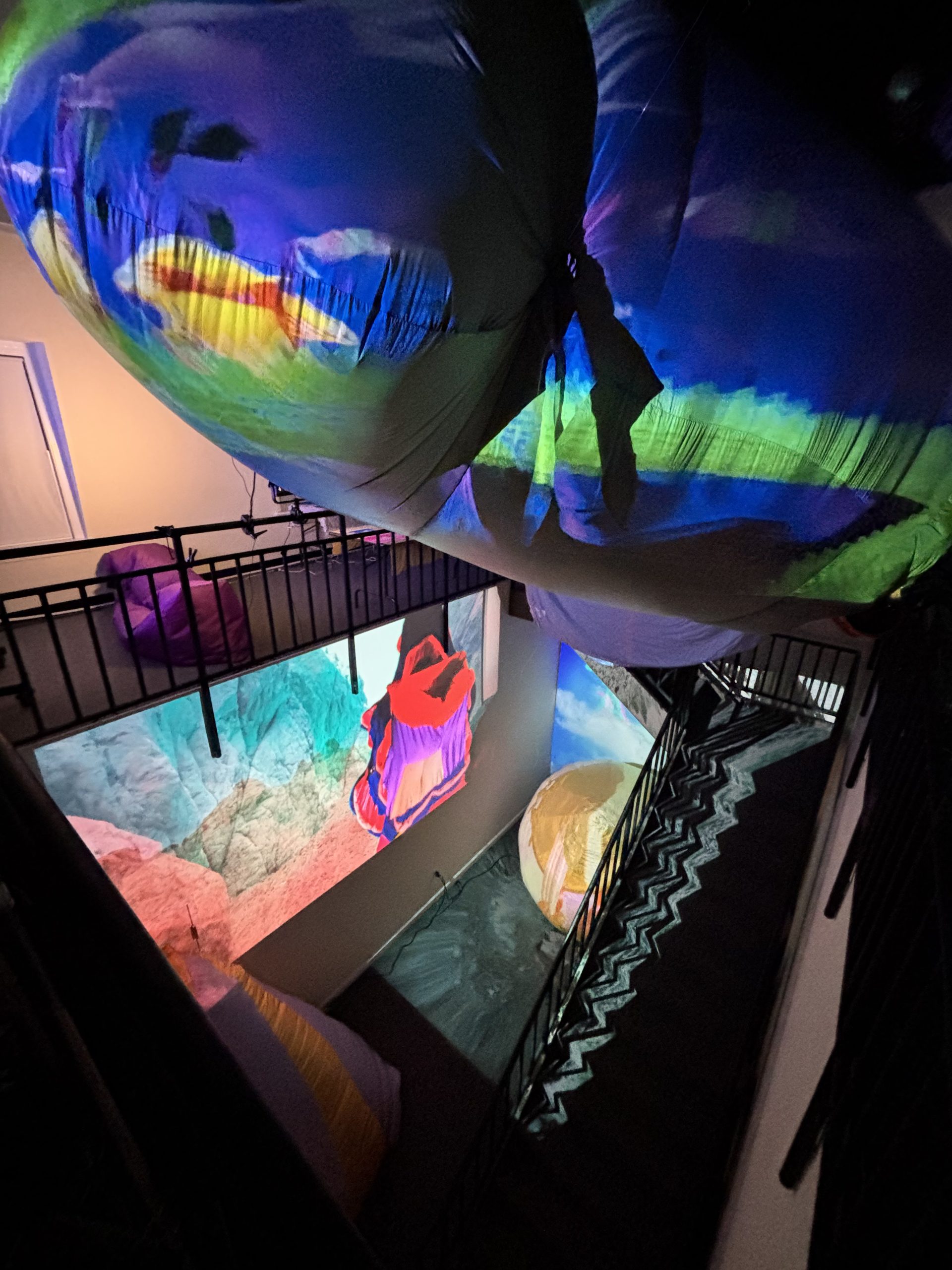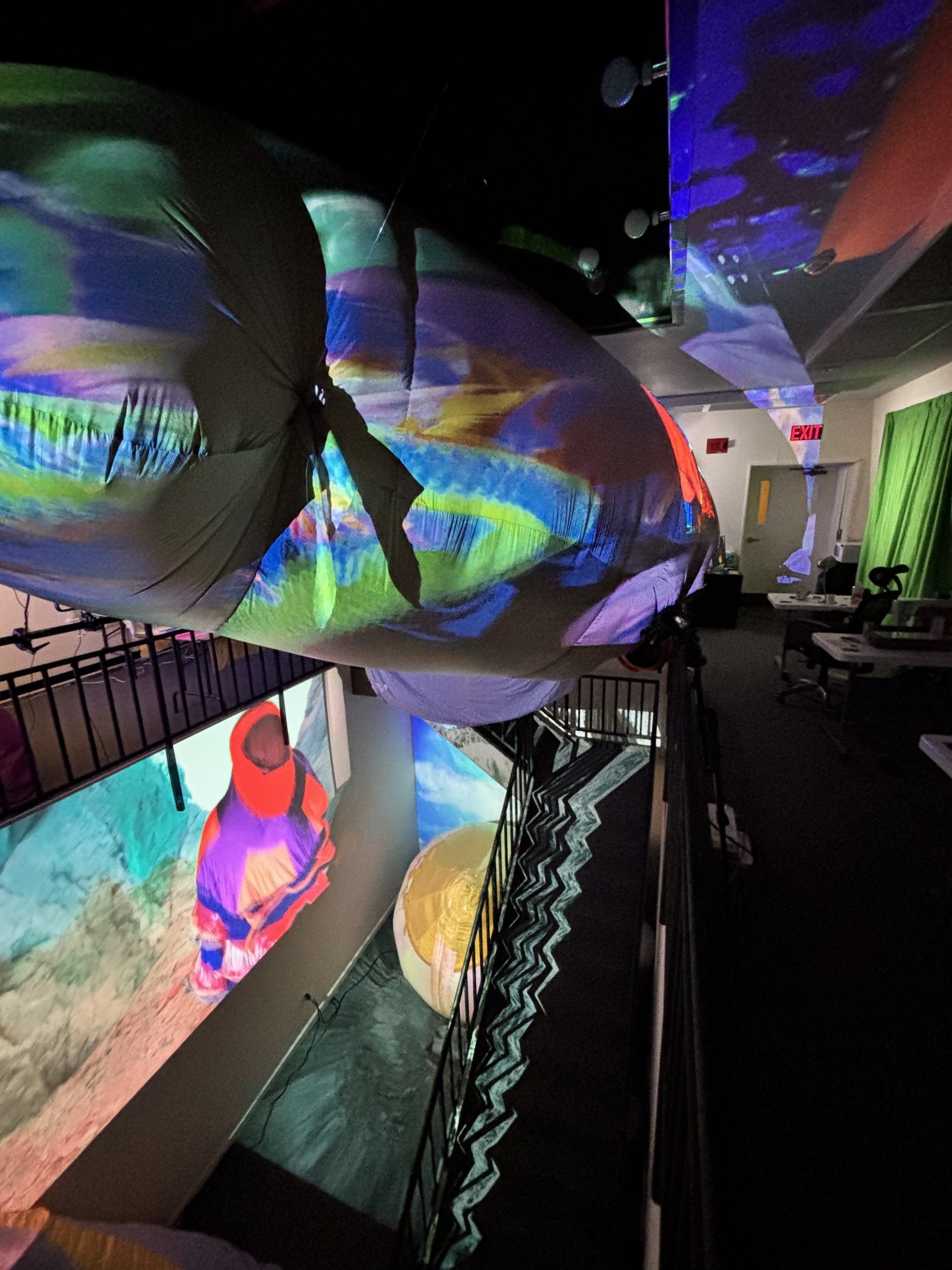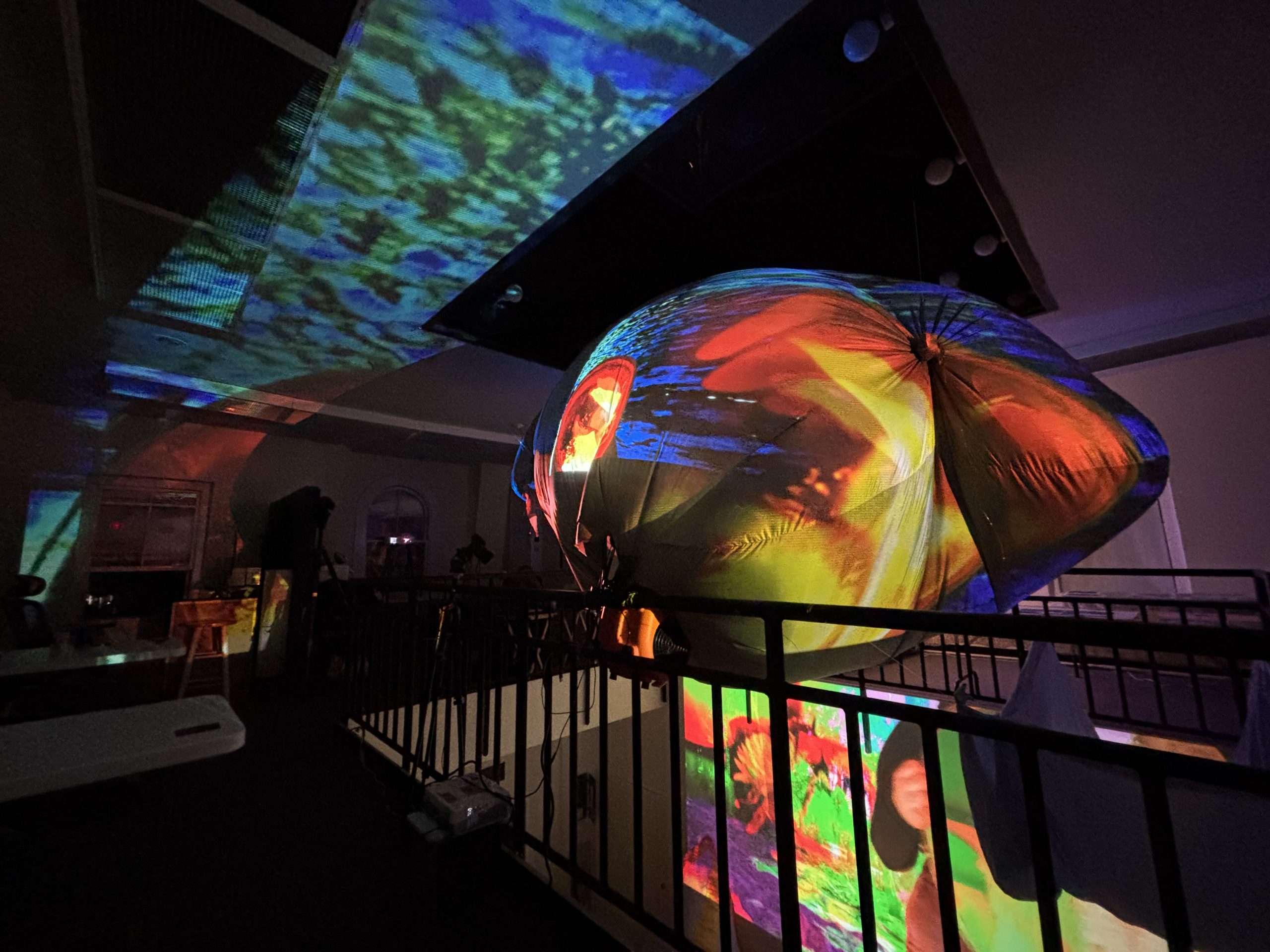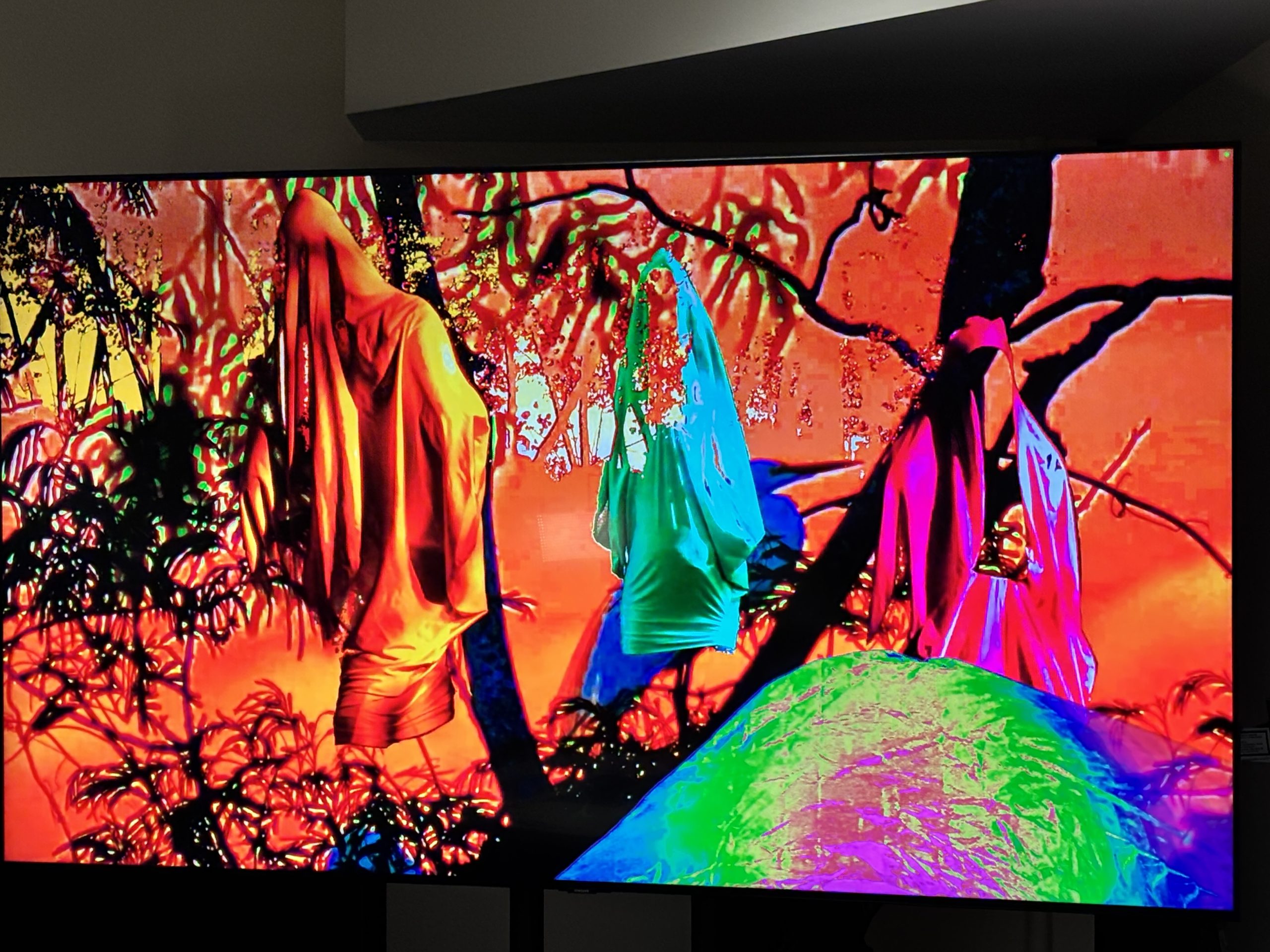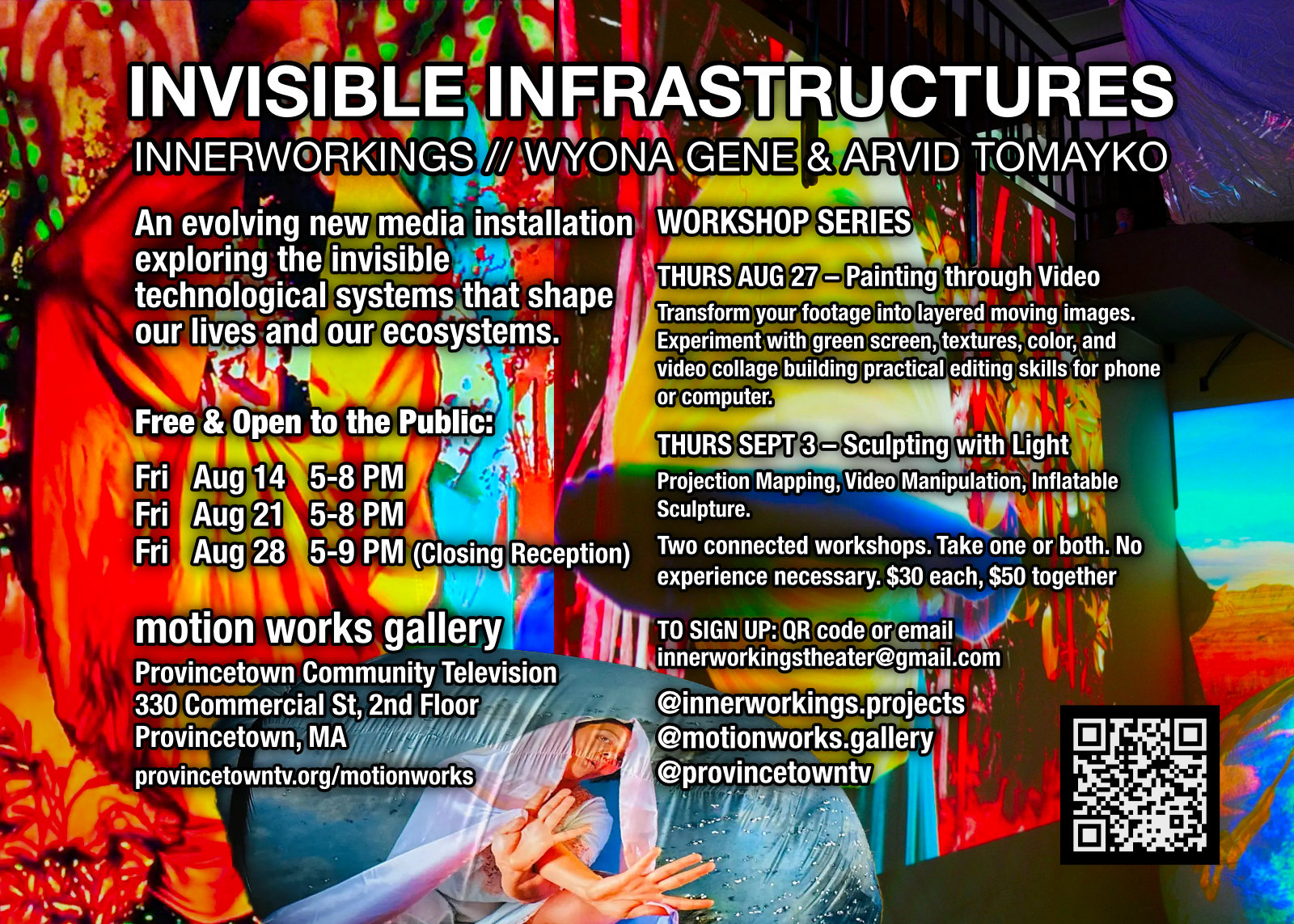
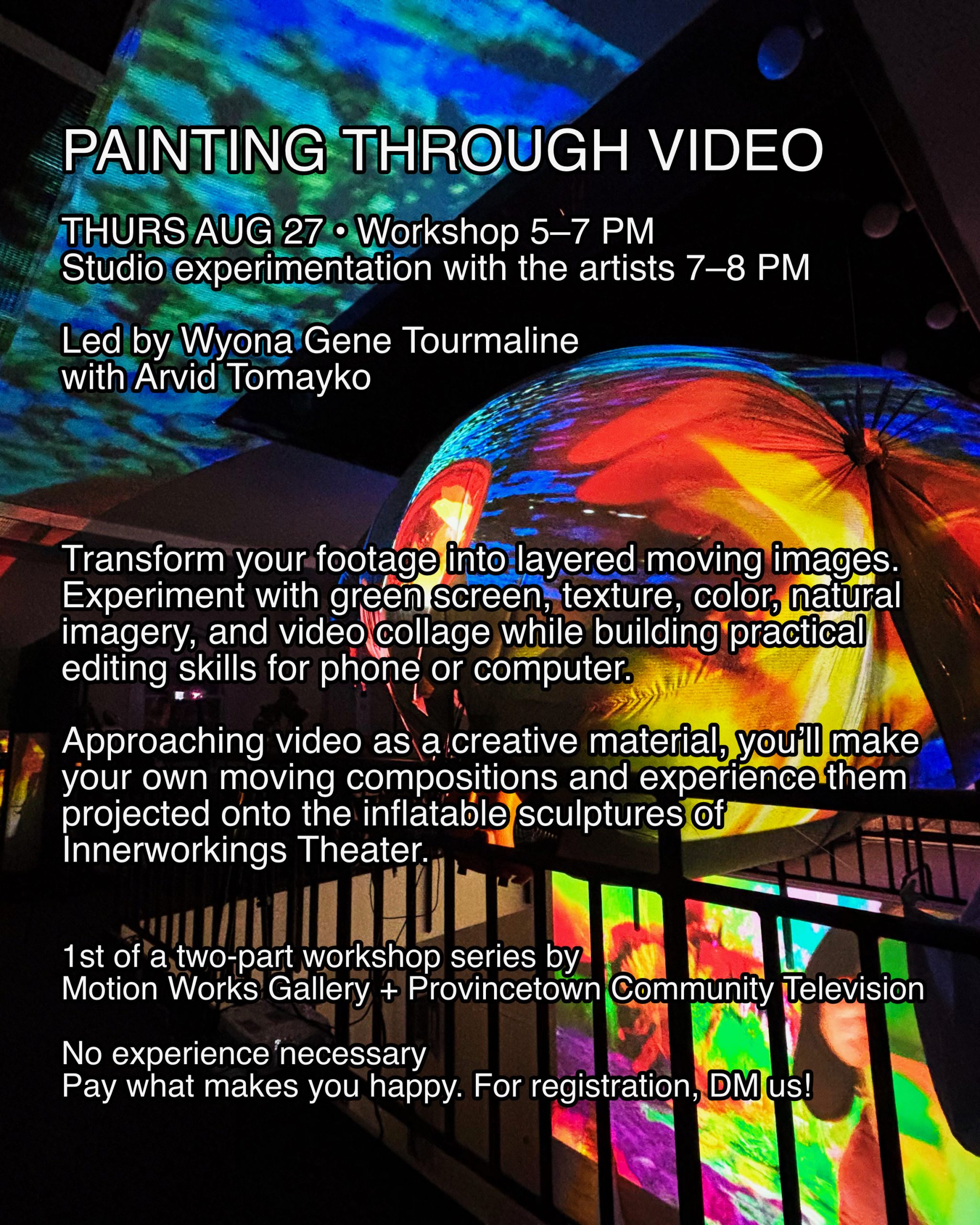
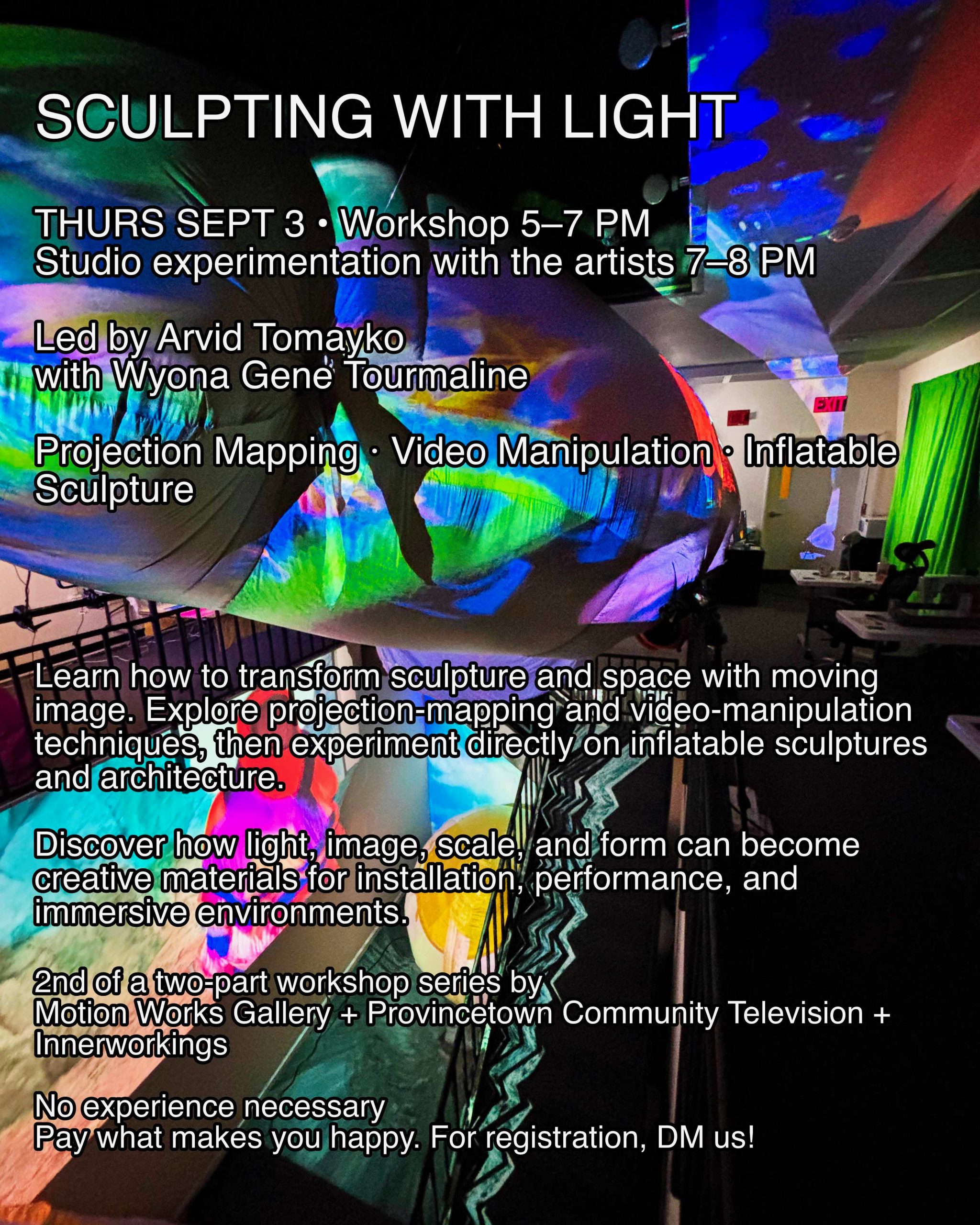
Invisible Infrastructures is an evolving installation and performance environment by Innerworkings, the collaborative practice of Wyona Gene Tourmaline and Arvid Tomayko. Bringing together inflatable sculpture, moving image, projection, green screen, sound, light, performance, and interactive technologies, the work considers the systems that shape our relationships to our bodies, one another, technology, and the environments we inhabit.
The project begins with things that are difficult to see directly.
Air gives structure to large forms sewn from parachute fabric. Projected light becomes visible when it encounters a body or surface. Cameras and software translate physical actions into images. Digital systems make decisions about what is foregrounded, obscured, layered, or ignored. Memory and perception alter how an experience is understood. These forces may be intangible, but their effects are physical.
Throughout Invisible Infrastructures, Innerworkings uses material experimentation to give these relationships temporary form.
The inflatable sculptures are central to this investigation. Each begins as a collection of flat pieces of fabric that, once joined and filled with air, becomes a temporary architecture. The resulting form is never entirely fixed. It depends on an ongoing relationship between fabric, air, pressure, gravity, the surrounding architecture, and the people moving around it. Air functions simultaneously as material, structure, and collaborator: an invisible presence made perceptible through what it changes.
Moving images behave similarly. Video is projected across fabric, bodies, walls, and sculptural forms rather than remaining contained by the rectangular frame of a screen. Images bend, overlap, fragment, disappear into folds, and change according to the surfaces receiving them. Green-screen processes further complicate these relationships, allowing bodies, landscapes, textures, and objects to occupy multiple visual spaces at once.
For Innerworkings, these technologies are not separate from embodied or sculptural practice. A projector produces light and heat. A camera determines a field of vision. Software interprets information according to its own structures. Cables, electricity, processors, speakers, sensors, fabric, air, and human bodies all participate in producing what can ultimately be experienced.
This attention to mediation raises questions about visibility. What does a system allow us to see? What does it obscure? What happens when a body is visible but not fully legible, or when something that cannot itself be seen becomes recognizable through its effects?
Invisible Infrastructures does not attempt to resolve these questions. Instead, the installation creates situations in which they can be encountered physically.
Chance is an important part of that process. Images misalign. Inflatable forms shift. Technologies respond in unexpected ways. Bodies interrupt projections. Light catches a surface differently than anticipated. Rather than treating these moments exclusively as errors, Innerworkings allows them to become part of the composition. The artists establish systems and conditions, then pay attention to what those systems do.
The public is part of this process as well. Visitors may move through the installation, watch, touch, experiment with technology, perform for cameras, encounter projections, or simply spend time observing how other people navigate the space. Participation is offered as a possibility. An encounter can be active or quiet; both can change how the work is understood.
Because of this, Invisible Infrastructures is intentionally unfinished. The exhibition functions simultaneously as installation, studio, laboratory, workshop, rehearsal space, and performance environment. Throughout its duration, Innerworkings continues to make new video, alter projections, build sculptural forms, test interactive systems, and respond to what happens when the public enters the work.
This evolving structure makes the process of experimentation visible. Instead of presenting technology as seamless or inevitable, Invisible Infrastructures exposes some of the negotiations through which an environment is continually produced: between air and fabric, image and surface, body and camera, signal and interpretation, artist and audience, intention and chance.
These relationships are also ecological. Ecology, here, is not approached primarily as an image of “nature,” but as a way of thinking about interdependence. A body changes a room. A room changes a projection. Air changes a sculpture. Technology changes perception. An audience changes an artwork, and what the artists learn from that encounter changes what they build next.
Invisible Infrastructures asks what becomes perceptible when we pay closer attention to these relationships.
The work gives temporary physical form to forces that are often experienced indirectly: air, memory, mediation, technological systems, perception, communication, and connection. Some become visible only through their effects. Others remain partially obscured.
Innerworkings is interested in staying with that partial visibility—making spaces where we can encounter what connects us without pretending that we can ever see the entire system at once.